Hannah Klugman's Nottingham Exit Masks a Brighter Reality
A second-round exit in Nottingham undersells the transformation Hannah Klugman felt after sharing courts with the world's elite.
The ball sailed long, the racket dropped, and the Nottingham crowd offered their polite, sympathetic applause. For 15-year-old Hannah Klugman, a 6-3, 6-4 second-round defeat at the Rothesay Open was, on paper, a standard tale of teenage promise Meeting seasoned professional reality. The scoreline will fade into the week's statistical dust, a mere blip on the WTA Tour calendar. But to measure Klugman's Nottingham campaign purely by the match she lost is to entirely miss the point of the week she just lived.
Klugman walked off the Centre Court turf not with her head bowed, but with a fundamentally recalibrated understanding of what the mountaintop actually looks like.
The British teenager admitted she feels "very different" after a week spent practising alongside "some great players." It is a deceptively simple quote, the kind that can easily be lost in the post-match shuffle of platitudes and quick handshakes. Yet, for a player operating at the precipice of her professional career, that psychological shift is worth more than any main-draw victory.
The Crucible of the Practice Court
Tennis is an inherently lonely sport, played inside the white lines in isolated, high-pressure silences. But the education of a prodigy does not happen solely under the umpire's gaze. It happens in the grinding, unglamorous hours of the practice court. It happens when a teenager used to dominating her peer group suddenly has to scrape and claw for every point against a woman ranked inside the world's top 50.
Grass-court season in Britain is a unique ecosystem. The bubble tightens. The intensity ratchets up. For a wild card like Klugman, gaining entry into the Nottingham draw was a privilege, but gaining entry into the elite hitting blocks was the real prize. The physical gap between a promising 15-year-old and a tour veteran is vast, but the sensory gap is wider. The ball comes off the racket heavier. The recovery time between shots is halved. The margin for error shrinks to a sliver.
"You realise very quickly that the margin for error at this level is basically zero. Every ball comes back, and it comes back with purpose. Practising with that intensity, day after day, changes your internal clock. It changes your standards."
Klugman did not specify which top players she shared the court with during her training blocks, but the Nottingham entry list featured the kind of hardened, power-hitting baseline operators who expose any technical or physical deficit immediately. Surviving that environment, absorbing that pace, and recognizing what is required to eventually conquer it, is the invisible curriculum of a tennis career.
The Grass Court Apprenticeship
It is easy to forget just how young Klugman is, largely because she has been on the radar of British tennis for so long. The LTA's elite pathway does not hand out wild cards lightly, and her presence in the main draw was a calculated vote of confidence from the governing body. They wanted to see how she would handle the leap in class.
The defeat itself was a classic case of a developing player struggling to navigate the transition from junior destructiveness to professional consistency. Klugman has the weapons. Her ball strike off both wings is heavy, her movement is explosive, and she possesses the kind of aggressive instinct that grass courts reward. But professional tennis is a game of sustained execution under duress. It is about denying your opponent free points. It is about recognizing the exact moment to pull the trigger on a winner versus the moment to absorb pace and reset.
Those are instincts forged in the fires of hundreds of main-draw matches. They cannot be downloaded in a week. However, the Nottingham experience provided Klugman with the definitive visual proof of what she is building toward.
Career by Numbers
- 15 years old: The current age of Hannah Klugman, making her one of the youngest players in the Nottingham main draw
- 6-3, 6-4: The second-round scoreline that ended her singles run at the Rothesay Open
- 2023 US Open: The junior Grand Slam where Klugman announced herself to the broader tennis world
- No. 800+: Her current WTA ranking, a number that will plummet rapidly with more tour-level exposure
- 0: The number of main-draw WTA wins she had prior to this week, a tally she will aggressively hunt down this summer
Decoding the "Very Different" Mindset
When a teenager says she feels "very different" after a week of hitting with the elite, she is describing a fundamental rewiring of her baseline expectations. Junior tennis, even at the highest level, allows for periods of coasting. You can dictate with sheer physical superiority. On the WTA Tour, physical superiority is the price of entry, not a decider.
Klugman's post-match reflection points to a player who has just undergone a stark, unfiltered look at her own gap analysis. She knows exactly what she needs to improve, how much stronger she needs to get, and how much sharper her court positioning must become. It is a harsh realization, but it is also an incredibly empowering one. Ambiguity is the enemy of development. Absolute clarity of the mountain ahead is what drives the hardest climbs.
The British tennis system has historically struggled with the transition from junior standout to tour-level grinder. The jump from the ITF Junior Circuit to the WTA Tour is wider now than it has ever been, penalized by the sheer physicality and depth of the modern game. But players like Emma Raducanu and Katie Boulter have recently reshaped the narrative around British female ballers, proving that the pathway from precocious talent to Grand Slam champion or top 30 mainstay, while brutal, is navigable.
Klugman sits comfortably in that new lineage.
The Legacy of a Week in Nottingham
As the grass-court season barrels toward the Championships at the All England Club, Klugman's immediate future remains fluid. She may receive a junior or main-draw wild card at Wimbledon, depending on the LTA's strategic assessments of her readiness. But regardless of what the next few weeks hold, the Nottingham Open will stand as a quiet, seminal milestone.
It was the week the teenager stopped being a prodigy watching from the outside and started being a competitor absorbing reality from the inside. The loss will hit the record books as a second-round exit. In the grander, more vital ledger of Hannah Klugman's career, it was the week the standard was irrevocably raised.
The greatest champions are not defined by the matches they win as teenagers. They are defined by the moments the game reveals its utmost severity, and instead of retreating, they lean in. Klugman is leaning in. The transformation has already begun.
Editorial Integrity
This is an original SportPulse article written by our editorial team. All content is independently researched, written, and reviewed by our writers and editors before publication. We do not publish copied, aggregated, or syndicated content.
SportPulse is committed to original sports journalism. Read our editorial policy or contact us with any questions.
More Like This
All tennis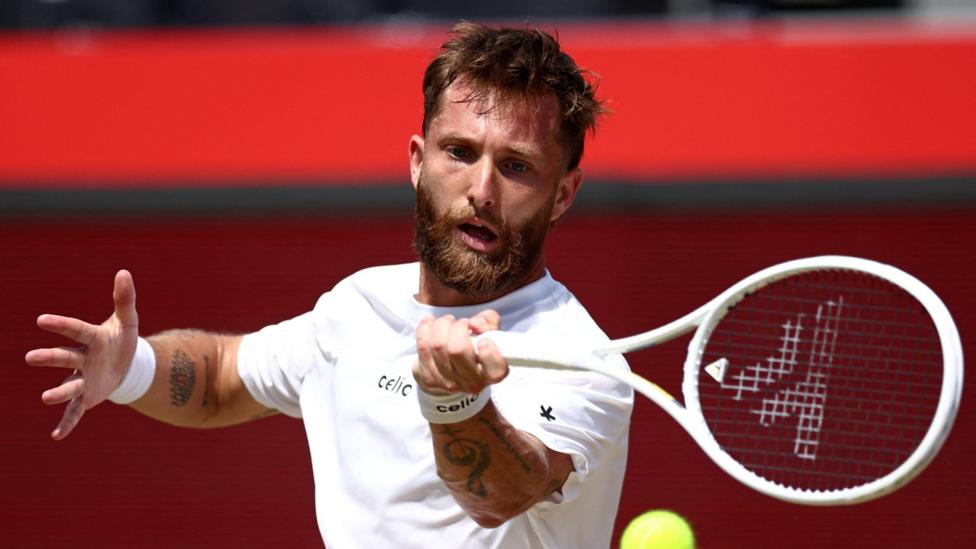
Moutet's Queen's Payday Wiped Out by $40,000 BBC Swearing Fine
Corentin Moutet fences away almost his entire Queen's prize money after a $40,000 fine for seven live BBC expletives.
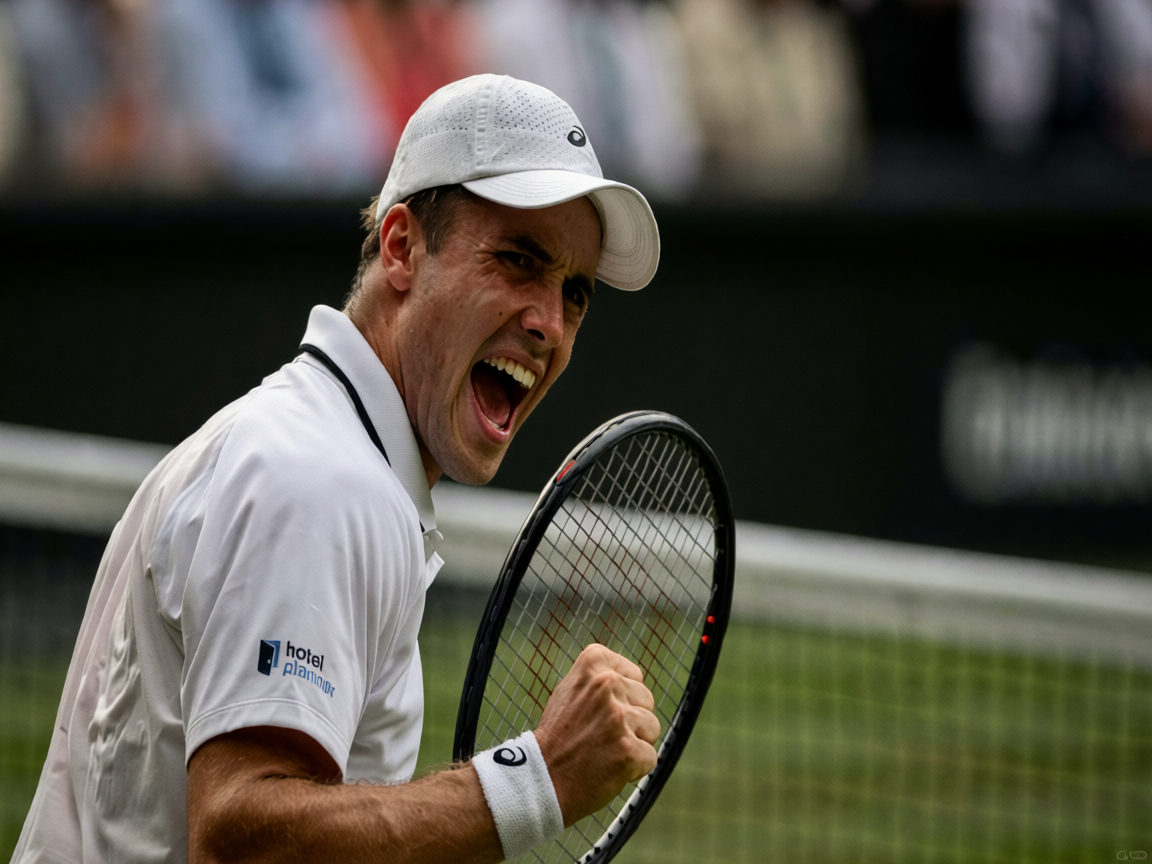
Fery's Wimbledon Quarter-Final: The Blueprint for History
Arthur Fery stands one win from joining Britain's Wimbledon elite. Here is the tactical path past Flavio Cobolli.
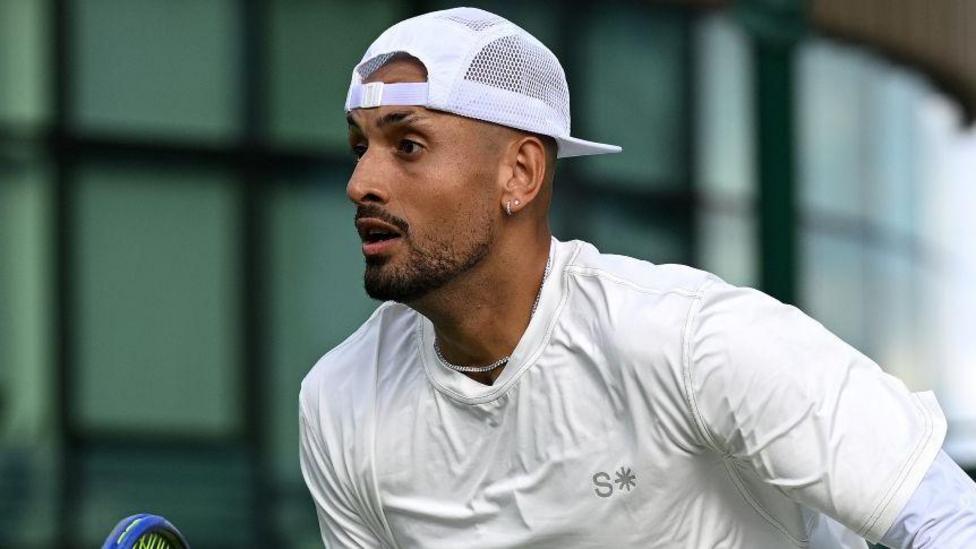
Kyrgios Is Back at Wimbledon. So Is the Chaos.
Nick Kyrgios swore at an umpire on his Wimbledon return, reminding everyone why he's tennis's most complicated genius.